
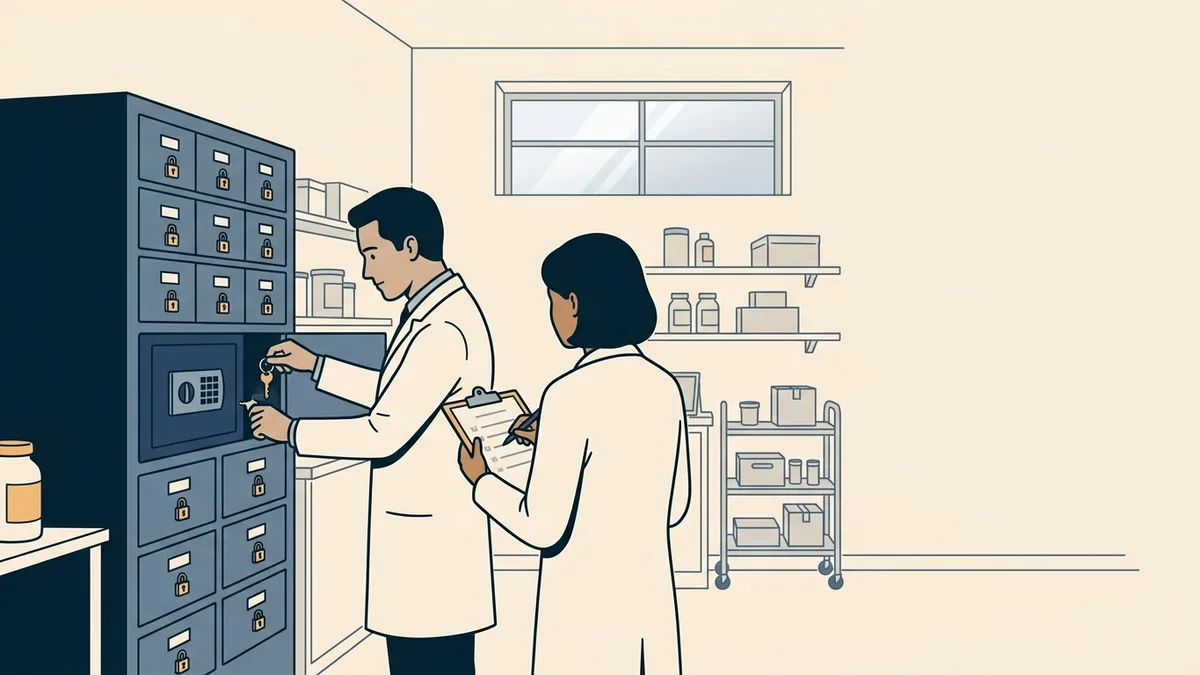
Oregon requires every out-of-state pharmacy serving Oregon residents to register with the Board. Under OAR 855-041-1060 the pharmacy must have an Oregon-licensed PIC within four months of licensure who is present at least 20 hours a week and completes a self-inspection before July 1 each year. A PIC change must be filled within 90 days.
Oregon's rule for out-of-state pharmacies is one of the shortest in the country, and one of the most demanding about staffing. Every non-resident pharmacy that provides drugs, devices or services to an Oregon resident must register with the Oregon Board of Pharmacy, and every one of them must have a pharmacist-in-charge who holds an Oregon license. The text is OAR 855-041-1060.
Who has to register in Oregon?
Oregon defines a non-resident pharmacy as any establishment outside Oregon that dispenses, delivers or distributes drugs to Oregon. It goes further than most states: the definition also covers entities that provide pharmacy services to Oregon, such as drugless or consulting outlets, even if they never ship a drug into the state (855-041-1060(1)). A remote verification or consulting operation that touches Oregon patients is inside the rule.
To qualify for registration, the pharmacy must be registered and in good standing with the board of pharmacy in its home state (855-041-1060(3)).
What must the Oregon PIC be?
The pharmacy must designate an Oregon-licensed pharmacist-in-charge who is responsible for all pharmacy services provided to Oregon residents and for supervision and control in the pharmacy (855-041-1060(4)). To qualify, that pharmacist must:
- Hold a license to practice pharmacy in the pharmacy's resident state.
- Be normally present in the pharmacy for at least 20 hours per week.
- Complete the Board's Non-Resident Retail Drug Outlet Self-Inspection Form every year before July 1.
- Provide that self-inspection form when the Board asks for it.
So the Oregon PIC holds two licenses (home state and Oregon) and works at your site at least half of a standard week. That rules out naming a pharmacist who works somewhere else, and it is why no outside firm can fill the role for you. We never supply or act as a PIC; see why a PIC must work at your pharmacy.
When does the four-month clock start?
Subsection (5) reads: every non-resident pharmacy "will have a pharmacist-in-charge (PIC) who is licensed in Oregon within four months of initial licensure of the pharmacy." In practice that gives a newly registered pharmacy a window to finish the PIC's Oregon license after the facility registration issues. It does not change the requirement in subsection (4) that an Oregon-licensed PIC be designated, so treat the four months as a deadline, not a grace period to start the work.
Pharmacist licensing usually runs through NABP's license transfer program plus any law exam Oregon requires. The pharmacist files in their own NABP e-Profile and takes the exam personally. Our posts on license transfer through eLTP and the MPJE explain the steps.
What happens when the PIC leaves?
Oregon sets three deadlines in 855-041-1060(6) and (7):
- 10 business days to notify the Board of the change and identify a contact person.
- The contact person must be a pharmacist licensed in the pharmacy's home state. Until a new PIC is in place, that person supervises pharmacy staff, ensures compliance and answers the Board's correspondence.
- 90 days to have an Oregon-licensed PIC employed. If a new PIC is not appointed and reported within 90 days, the pharmacy must stop distributing drugs and providing pharmacy services in Oregon.
Ninety days is not much time to license a pharmacist from scratch. A pharmacy that ships into Oregon in volume is safer with a second pharmacist already holding an Oregon license. Our post on planning which pharmacists to license in which states works through that math, and reporting a PIC change to every board lines up Oregon's deadline against other states'.
How does Oregon compare with Oklahoma?
Both states use a 20-hour presence rule for an in-state-licensed PIC, but the details differ. Oklahoma wants the Oklahoma license number on the initial application and reports changes within 10 days (OAC 535:15-3-9). Oregon allows four months after initial licensure and gives 90 days after a change, but adds the annual self-inspection before July 1. See Oklahoma's nonresident license for the side-by-side, and the 16 states that require an in-state licensed PIC for the full list.
Can we prepare the Oregon registration?
Yes. Oregon is on our complex-state list, so the Nonresident Pharmacy License fee is $899. We assemble the registration, the home-state verification and every attachment, calendar the July 1 self-inspection, and send the signed application for you where the Board accepts paper or email; your owners and PIC sign their own pages. PIC Licensing Coordination for the Oregon license is $399 per pharmacist, and License Renewal Tracking ($299 per license, per year) watches the PIC deadlines alongside the renewal. Board and NABP fees are paid by the pharmacy directly. Current facts live on the Oregon requirements page.
Common questions
- Does Oregon require the PIC to hold an Oregon license?
- Yes. OAR 855-041-1060 requires an Oregon-licensed pharmacist-in-charge who is also licensed in the pharmacy's home state, and gives a new pharmacy four months after initial licensure to have one.
- How many hours must the Oregon PIC be at the pharmacy?
- The PIC must be normally present in the pharmacy for at least 20 hours per week.
- What happens if the Oregon PIC leaves?
- Notify the Board within 10 business days and name a contact pharmacist licensed in your home state. An Oregon-licensed PIC must be employed within 90 days, or the pharmacy must stop distributing drugs and providing pharmacy services in Oregon.
- Do consulting or non-dispensing pharmacies need to register in Oregon?
- They can. Oregon's definition includes entities that provide pharmacy services to Oregon, such as drugless or consulting outlets, even if they do not ship drugs into the state.
Need Help with Pharmacy Licensing?
We prepare every state's nonresident application for your officers and PIC to sign, coordinate your pharmacists' licenses, and track every one to a decision.