
Oklahoma requires an annual non-resident pharmacy license for any out-of-state pharmacy serving Oklahoma residents. The pharmacy needs a home-state license, an inspection within 24 months, a commercial location, and an Oklahoma-licensed PIC who is present at the pharmacy at least 20 hours a week, under OAC 535:15-3-9.
Oklahoma treats any pharmacy outside the state that solicits, receives, dispenses or delivers prescriptions to Oklahoma residents as a non-resident pharmacy, and it requires a license before the first package goes out. The rule that governs the license is short, but two of its lines change how a mail-order or specialty pharmacy staffs its operation: the pharmacist-in-charge must hold an Oklahoma pharmacist license, and that PIC must actually be at the pharmacy at least 20 hours a week.
Everything below comes from Oklahoma Administrative Code 535:15-3-9, the Board of Pharmacy's non-resident pharmacy rule. Fees are set by the Board and are not in the rule, so we do not quote one here; check the Board's current application before you budget.
What does the license itself require?
Under OAC 535:15-3-9(b), a non-resident pharmacy must:
- Apply for and receive an annual non-resident pharmacy license, at a fee the Board sets.
- Keep its home-state pharmacy license in good standing.
- Comply with the Oklahoma Secretary of State's requirements for doing business in the state.
- Submit, at initial licensure and at every renewal, a written report of an inspection conducted within the previous 24 months by the home state or by an organization the Board approves.
- Be in a commercial location, not a personal dwelling or residence.
- Name an Oklahoma-licensed pharmacist-in-charge and give that pharmacist's Oklahoma license number on the initial application.
The commercial-location rule catches a small number of new telehealth-fulfillment operations that start in a converted home office. Oklahoma will not license that site, whatever its home state allows.
Who can serve as the Oklahoma PIC?
The rule is specific. The pharmacist manager (Oklahoma uses "pharmacist manager" and "pharmacist-in-charge" interchangeably) and every pharmacist performing pharmacist-only functions must be licensed in the state where the pharmacy is located. The PIC must also be licensed by the Oklahoma Board (535:15-3-9(c)(1)). On top of that:
- No pharmacist may be PIC of more than one pharmacy at a time (c)(3).
- The PIC must be present and practicing at the pharmacy no less than 20 hours per week during its ordinary course of business. If the pharmacy is open fewer than 40 hours a week, the PIC must be there for at least half of its normal hours (c)(4).
- The PIC must work enough hours to exercise control and meet the role's responsibilities (c)(5).
Put together, the Oklahoma PIC has to be one of your own pharmacists, working at your dispensing location, who also holds an Oklahoma license. A pharmacist who lives elsewhere and lends a license number cannot satisfy a 20-hour presence rule. That is one reason we never supply or act as a PIC; our post on why a PIC must work at your pharmacy covers the same point across states.
How fast must a PIC change be reported?
The name of the Oklahoma-licensed PIC goes to the Board in writing with each renewal and within 10 days of any change (535:15-3-9(b)(6)). If your PIC leaves suddenly and the replacement is not yet licensed in Oklahoma, the pharmacy can ask the Board in writing for more time. In emergency or urgent situations the Board may grant up to a 90-day extension for the new PIC to get licensed (b)(7). The extension is discretionary, so plan as if you will not get it.
The practical answer is bench depth: license a second pharmacist in Oklahoma before you need one. A pharmacist already licensed in another state usually applies through NABP's license transfer program and sits for any law exam Oklahoma requires; see pharmacist license transfer through NABP eLTP and the MPJE for pharmacists licensing in another state.
Which operating rules follow the license?
Oklahoma pharmacy law applies to the Oklahoma portion of your practice (535:15-3-9(c)). The rule spells out several operating duties that inspectors and complaint investigators look for:
- Toll-free counseling. Accessible toll-free telephone counseling by a licensed pharmacist for patient drug questions during regular working hours (f).
- Records. Prescription records for Oklahoma residents kept at least five years, identifiable and readily retrievable, with Schedule II to V records reported to the Oklahoma Prescription Drug Monitoring Program (e).
- Diversion policy. A written drug diversion detection and prevention policy available for Board review (h).
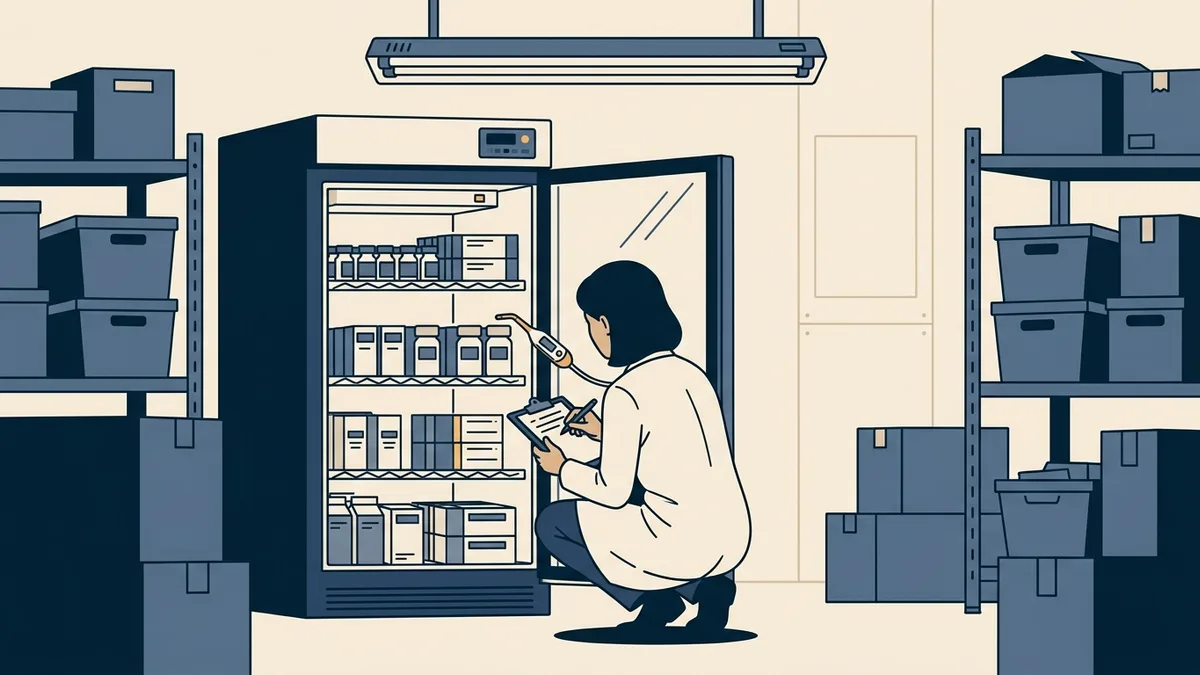
- Temperature logs. Refrigerator and freezer temperatures logged twice a day on open days, or continuously monitored, with logs kept two years; reviewing them is the PIC's job (i).
- Shipping. Packaging that keeps each drug within its labeled temperature range for the whole trip, and a duty to refuse to mail a drug that would be compromised by mail or common carrier (j).
- Board contact information. A mail-order or non-resident pharmacy must make the Oklahoma Board's contact information available to the patient or caregiver (j)(3).
The Board may also inspect non-resident pharmacies and investigate them during reasonable business hours (d).
Where do Oklahoma applications usually slip?
- The PIC is not licensed in Oklahoma yet. The license number is required on the initial application, so pharmacist licensing has to start first.
- An inspection older than 24 months. If your home state inspects on a long cycle, check the date before you file. Our post on inspection report age limits by state compares Oklahoma with the rest.
- A PIC who splits time. A pharmacist named PIC at two locations fails (c)(3) even if both are your stores.
- Secretary of State registration left for later. The rule makes it a licensing condition, not an afterthought.
How do we help with Oklahoma?
Oklahoma is on our complex-state list because of the in-state PIC rule, so the Nonresident Pharmacy License fee is $899 for this state. We prepare the application and every attachment, track the inspection date, and send the signed application for you where the Board takes paper or email; your owners, officers and PIC review and sign every attestation themselves. If your PIC needs an Oklahoma license, PIC Licensing Coordination is $399 per state per pharmacist: we plan the transfer and exam sequence and track it to license, while the pharmacist files the NABP application in their own e-Profile and takes any exam personally. Board and NABP fees are paid by the pharmacy directly. The Oklahoma requirements page keeps the current facts in one place, and the 16 states that require an in-state licensed PIC shows where else this applies.
Common questions
- Does the Oklahoma PIC have to be licensed in Oklahoma?
- Yes. OAC 535:15-3-9 requires the PIC to be licensed in the pharmacy's home state and also by the Oklahoma Board, and the Oklahoma license number goes on the initial application.
- How many hours must the Oklahoma PIC work at the pharmacy?
- At least 20 hours a week during the pharmacy's ordinary course of business. If the pharmacy is open fewer than 40 hours a week, the PIC must be present for at least half of its normal hours.
- What happens if our Oklahoma PIC leaves?
- Report the change in writing within 10 days. If the new PIC is not yet licensed in Oklahoma, you can ask the Board for more time; in emergency or urgent situations it may grant up to 90 days.
- How old can the inspection report be for Oklahoma?
- No more than 24 months, at initial licensure and at each annual renewal. It can come from the home state or from an organization the Board approves.
Need Help with Pharmacy Licensing?
We prepare every state's nonresident application for your officers and PIC to sign, coordinate your pharmacists' licenses, and track every one to a decision.