
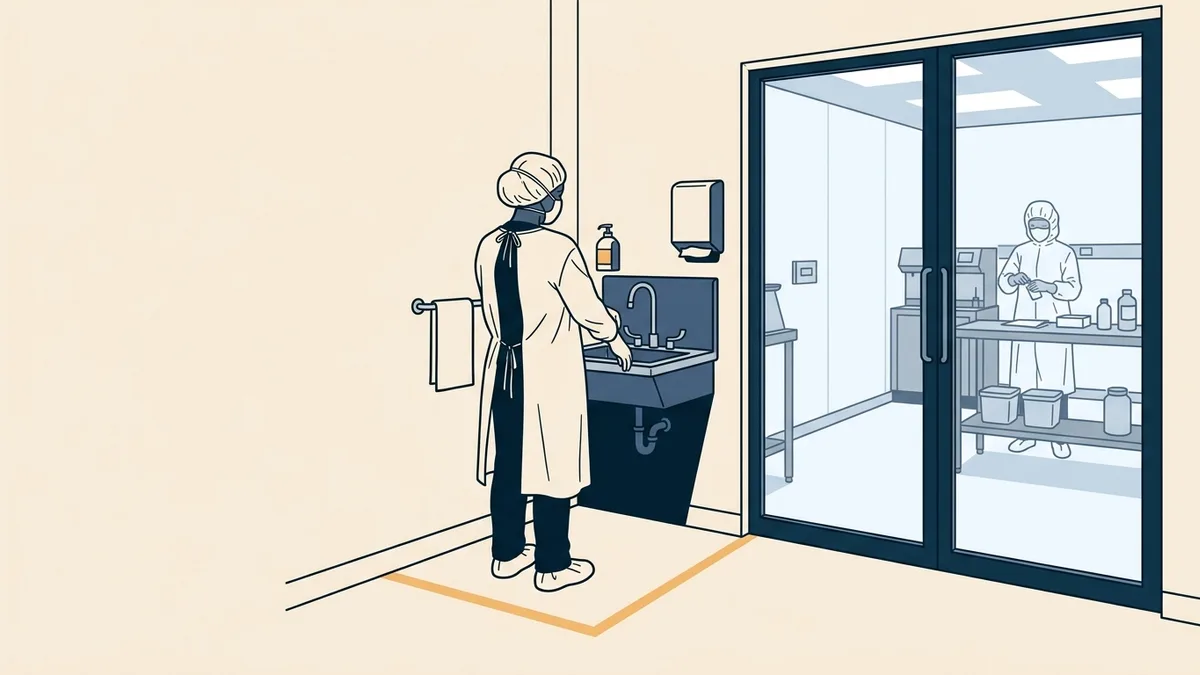
Several states require more than a nonresident license to ship compounded sterile preparations. California and Florida issue separate sterile licenses or permits, Massachusetts requires a separate license and a Board inspection, Texas requires the Class E-S license, and Virginia wants an inspection showing USP-NF compounding compliance. New Mexico, Tennessee and Michigan set 12- or 18-month inspection windows.
A pharmacy that compounds sterile preparations and ships them to patients in other states needs more than the standard nonresident license in a number of states. Some issue a separate sterile compounding license or permit. Others fold sterile work into the main license but add an inspection, an attestation, a fee or a shorter window for how old the inspection report may be. The rules below are for traditional pharmacy compounding by a licensed pharmacy (what federal law calls section 503A compounding, 21 U.S.C. 353a). Outsourcing facility registration is a different regime, and not one we handle.
Which states issue a separate nonresident sterile license?
California
"A nonresident pharmacy shall not compound sterile drug products for shipment into this state without a sterile compounding pharmacy license" (Bus. & Prof. Code 4127.2(a)). The license is renewed annually, is not transferable, and is issued only to the owner of a location already licensed as a nonresident pharmacy. It is not issued or renewed until the Board inspects the location, and the pharmacy reimburses the Board's costs of inspecting "at least once annually." Before issuing, the Board also reviews the sterile policies and procedures, the completed self-assessment, every inspection and accreditation report from the prior 12 months, and a list of every sterile product compounded in that period (4127.2(c), (d)). See California's separate sterile compounding license.
Florida
A nonresident pharmacy registered under Fla. Stat. 465.0156 must also hold a nonresident sterile compounding permit to ship compounded sterile products into Florida (465.0158(1)). The application includes an attestation by an owner or officer and by the prescription department manager or PIC, the pharmacy's sterile policies and procedures meeting USP chapter 797, and a current inspection report: one conducted "within 6 months before the date of submitting the application for the initial permit or within 1 year before" a renewal (465.0158(3)). See Florida's nonresident sterile compounding permit.
Massachusetts
Massachusetts licenses nonresident pharmacies only for certain activities, and sterile compounding is one: a pharmacy may not ship a sterile compounded preparation into Massachusetts unless it holds both a non-resident Drug Store Pharmacy license and a non-resident sterile compounding pharmacy license (247 CMR 6.02(5)). The sterile application includes certified blueprints identifying the ISO classification of each engineering control, an HVAC design plan, and an attestation signed by the Massachusetts-licensed designated PIC and the applicant. The applicant must "achieve a satisfactory Board inspection" before the license issues, and the sterile license expires December 31 each year (247 CMR 6.09(2)). Complex non-sterile compounding has a parallel license (6.02(6), 6.09(3)).
Texas
Texas says "Class E pharmacy personnel shall not compound sterile preparations unless the pharmacy has applied for and obtained a Class E-S pharmacy license" (22 Tex. Admin. Code 291.104(a)(14)). Texas is also an in-state PIC state, so the Class E-S file sits on top of a Texas-licensed PIC.
Which states add inspection rules instead of a separate license?
- Virginia requires the nonresident pharmacy's inspection report to show "compliance with USP-NF standards for pharmacies performing sterile and non-sterile compounding," and to be no more than six months old for an initial registration or two years old at renewal (Va. Code 54.1-3434.1(A)(3)).
- New Mexico requires, if compounded sterile preparations will ship into the state, a copy of the most recent sterile operations inspection showing conformance with USP chapters numbered below 1000, conducted "within the 12 months immediately preceding receipt of the license application" (16.19.6.24(C)(1)(d) NMAC).
- Tennessee requires an out-of-state pharmacy "engaged in compounding" to provide an inspection performed within the previous twelve months, and accepts an FDA or NABP inspection in lieu of the home-state board's (Tenn. Comp. R. & Regs. 1140-01-.08(3)(a)(4)).
- Michigan requires an out-of-state applicant that will provide sterile compounded pharmaceuticals in Michigan to submit an inspection completed no more than 18 months before the application, unless accredited by a Board-recognized organization. The inspection may be by the department, NABP's Verified Pharmacy Program, an approved accreditor, or the home-state board following NABP's multistate inspection blueprint (Mich. Admin. Code R 338.534(2)).
- Iowa requires the inspection report to address "all aspects of the pharmacy's business that will be utilized in Iowa" (Iowa Code 155A.13A(1)(c)), so a general inspection that never looked at your cleanroom will not cover sterile shipments.
What does a sterile add-on file usually need?
Across these states the same documents recur, so it pays to build them once:
- A current sterile inspection. The windows differ: 6 months (Florida initial, Virginia initial), 12 months (New Mexico, Tennessee for compounders), 18 months (Michigan), or a Board inspection before issue (California, Massachusetts).
- Sterile policies and procedures aligned to USP chapter 797 (Florida names it expressly; California reviews them before issuing).
- Facility documents, such as Massachusetts's certified blueprints and HVAC plan.
- Owner, officer and PIC attestations, signed personally (Florida and Massachusetts).
- A list of compounded products for California's prior 12 months.
Ongoing duties follow the license. California requires disciplinary actions and accreditation suspensions reported within 10 days and recall notices and adverse effects within 12 hours (4127.2(e), (f)).
How does sterile work change timing?
A Board inspection before issue means the state's calendar controls. California and Massachusetts both inspect before licensing and bill the pharmacy for costs. A fresh inspection may also be needed simply to meet a six-month window. For a pharmacy expanding into several states at once, the order of applications should follow the inspection date: file the six-month states first, while the report is fresh. Our post on how old your inspection report can be lists the general windows.
Where do we fit, and who signs?
Our Sterile Compounding Add-On is $499 per state, on top of the nonresident license. We assemble the sterile application, attestation pages, policy cross-references and inspection packet for each state, track Board inspections, and keep the inspection-age windows on your calendar. Your owners, officers and PIC sign every attestation, and the pharmacy pays board and inspection fees directly. We do not handle outsourcing facility registration. For multi-state planning, see multi-state licensing for 503A compounding pharmacies.
Common questions
- Do I need a separate permit to ship sterile compounds into Florida?
- Yes. A registered nonresident pharmacy must also hold a nonresident sterile compounding permit. The application needs an owner or officer and PIC attestation, USP 797 policies, and an inspection no more than 6 months old for an initial permit or 1 year old at renewal.
- Does California inspect nonresident sterile compounders?
- Yes. California will not issue or renew a nonresident sterile compounding license until the Board inspects the location, and the pharmacy reimburses the Board's costs of inspecting at least once a year.
- Does a general inspection report cover sterile compounding?
- Not always. Iowa requires the report to address every aspect of the business used in Iowa, Virginia requires it to show USP-NF compounding compliance, and New Mexico requires a sterile operations inspection within 12 months.
Need Help with Pharmacy Licensing?
We prepare every state's nonresident application for your officers and PIC to sign, coordinate your pharmacists' licenses, and track every one to a decision.